Galactic Jems

You must be 21 years or older to enter this site. Please verify your age to continue.

Home / Shop / Flower
Cultivars landing soon

Hemp Flower

There is no flower for sale on this page. There is, instead, an explanation of what we are waiting for — which turns out to be the more useful thing to read before you buy flower from anybody.

Why There Is Nothing To Buy Here Yet

We could have listed flower months ago. Buying finished product wholesale, putting our label on it and photographing it against a starfield is roughly a weekend of work, and plenty of brands you have heard of are doing exactly that right now.

What that weekend does not buy you is any real knowledge of what is in the jar. You inherit somebody else's dry, somebody else's cure, and somebody else's decision about whether to send a failing batch back or quietly blend it into a passing one.

So this page is what we are publishing instead of a product listing: the standard, written down before there is anything for you to hold it against. It is a slightly strange thing to put on a shop, but it is the honest order to do it in.
Almost Everything Happens After Harvest

The intuition most people have is that flower quality is decided in the grow — genetics, nutrients, lights, the grower's instincts. Those matter. But the gap between flower that makes you stop and smell it again and flower that is merely fine is usually decided in the three weeks after the plant is cut, by somebody choosing to be patient.

Take two growers with the same clone, the same room and the same feed schedule. One needs cash flow, so the harvest goes into a hot room and is dry in three days. The other takes two weeks at low heat and then cures for a month. Those are not two grades of the same product. They are different products, and the second one costs more to make almost entirely in time and electricity.

Most of what you are paying for in good flower is somebody having done nothing, carefully, for several weeks.

That is the unglamorous version, and it is why this page is mostly about temperature and humidity rather than about strain names we do not have yet.

The Dry, Where Most Flower Is Quietly Ruined

We dry at roughly 60°F and 60% relative humidity for ten to fourteen days. That is the boring answer and it is the whole trick.

Push heat into a dry room and two things go wrong at once. The outside of the bud dries while the inside is still wet, which traps chlorophyll and moisture where you cannot get at them later — that is the source of the hay smell you have met before, and no amount of curing afterwards removes it. Meanwhile the terpenes start leaving.

Terpenes are volatile organic compounds, which is a technical way of saying they evaporate at temperatures that do not feel hot to you. The lightest ones go first, and the lightest ones are frequently the interesting ones — the citrus and pine notes at the top of the profile. They do not come back. There is no stage later in the process that recovers them.

A three-day dry gets product to a shelf eleven days sooner. That is the entire argument for doing it, and it is a cash flow argument rather than a quality one. It is also completely invisible to the customer, which is why it is so common.

The Cure: Two Weeks Minimum, Usually Four

Once the flower is dry it goes into sealed vessels held at 62% relative humidity, and gets burped on a schedule — opened briefly to vent, then closed again.

What is happening in there is slow chemistry. Residual chlorophyll and plant sugars break down, which is what actually removes the grassy note. The vented gas includes ammonia produced as that material degrades, and burping is how it leaves rather than sitting in the jar and being the first thing you smell.

We are targeting 10 to 12% moisture and a water activity between 0.55 and 0.65. Water activity is the measure labs actually use for microbial risk, and it is a better number than moisture content because it describes how much of that water is available to mould rather than how much is present. Above 0.65 you are supporting growth. Below about 10% moisture the flower goes brittle and dusty and you have lost the other way.

This is the honest reason we cannot give you a launch date. The cure does not compress, and a date on a calendar is exactly the kind of pressure that shortens it.

If a brand can tell you weeks in advance precisely which day flower will be listed, one of two things is true. It is already cured and sitting in storage, which is fine. Or the cure is going to be whatever length of time is left before the date they announced.

Then: Cold, Dark, and 62%

Curing well and then storing badly is a way to throw the work away in about a month. We hold finished flower dark, between 60 and 70°F, at 62% RH, and it ships in opaque, airtight packaging with a two-way humidity pack in the jar.

Heat is the slow problem: it drives the conversion of THCA toward CBN over time, which changes the character of the flower in a direction most people are not looking for. Light is the fast problem. UV degrades a terpene profile quicker than anything else in the chain, which is worth remembering the next time you see product displayed in clear glass under a bright shop light. That is merchandising. It is not storage.

When it arrives, the same rules apply at your end, with one addition: do not put it in the fridge. The temperature swing every time the door opens drives condensation, and condensation is how you get mould in something you were trying to look after. There is more on this in storage and shelf life.

What The Lab Says Before We Say Anything

Every batch goes to an accredited third-party lab before it is listed, photographed or announced. The panel covers potency, pesticides, heavy metals, microbials, mycotoxins and residual solvents.

Each batch links to its own COA. This sounds like a low bar and it is not: a common industry practice is to publish one good certificate and leave it up while the product behind it changes underneath. If the batch number on the jar does not appear on the certificate, the certificate is describing something else.

And if a batch fails, it does not get listed. It does not get blended into a passing lot either. That is a real cost, and being willing to eat it is most of what separates testing as a practice from testing as a marketing line. How to read a COA covers the panels people skip.

About The Word "Organic"

Our flower is grown without synthetic pesticides, herbicides or chemical fertilizers. We are still not going to print the word "organic" on the jar, and you should know why, because most of our competitors will.

"Organic" is a term the USDA regulates. Putting it on an agricultural product you have not had certified is enforceable, and separately actionable by the FTC as an unsubstantiated claim. Hemp is eligible for that certification; we have not completed it; so we do not get to use the word yet.

The word costs nothing to type. A pesticide panel costs money and can embarrass you. We would rather hand you the second one.

When that certificate exists with our name on it we will say so and show you a scan. Until then, the pesticide and heavy metal panels on every batch COA are the thing to check, and they are more informative than the adjective would be. There is a fuller answer in the FAQ.

Our flower tests under 0.3% delta-9 THC by dry weight, which is the federal definition of hemp under the 2018 Farm Bill, and the figure comes off the batch COA rather than from a marketing page.

Here is the nuance, which we would rather explain than have you discover: flower is sold on THCA, and THCA converts to delta-9 THC when you heat it. That is what happens when you smoke it, and it is the entire point. So the compliant number on the certificate and the experience you actually get are measuring two different things. That is not us being clever — it is how the law is written — but it does mean the legal picture for flower specifically is more contested than it is for edibles, and state law moves faster here than federal law does.

We check every order against our restricted list and block shipment to the eleven states that prohibit these products, rather than leaving you to catch it. Our flower guide works through the THCA calculation, and where hemp THC can ship covers the state rules.

Cultivars

The strains we are bringing to market, with the lab work we hold on each. Potency figures below are transcribed from the linked report, and each report is published in full rather than summarised.

Read the date on each report. These describe lots we have previously had tested, not the batch that will ship to you. Every listed batch gets its own report and that one replaces these — a certificate that does not match the batch in your hand tells you nothing about what you are holding, as our COA guide puts it.

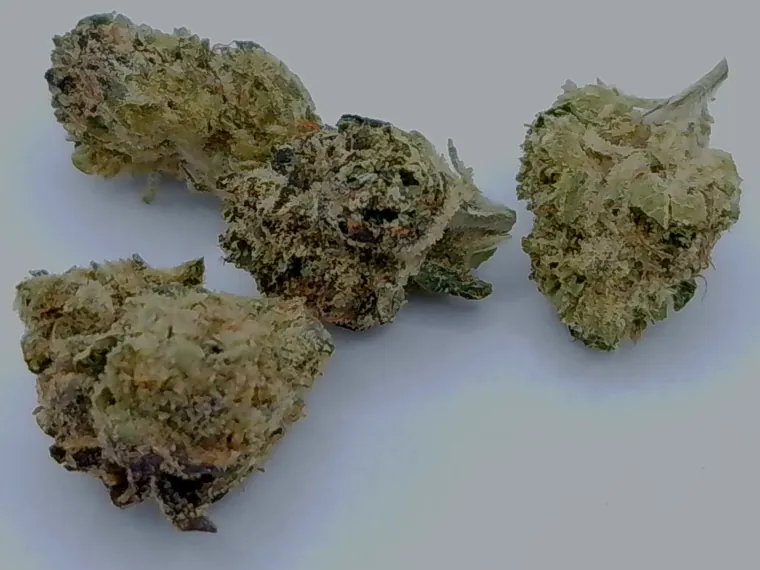
Three cured Glitterbomb flower buds with dense trichome coverage, photographed on a light grey surface

Glitterbomb

Coming soon

Indoor-grown flower

The stronger of the two on paper, and a clean single-cannabinoid profile: THCA at 28.4% with CBD, CBN, delta-8 and THCV all below detection, so what you get is THCA and very little else. Indoor-grown and hand-finished — the buds in the photograph are the lot the report describes, dense and pale green under heavy trichome coverage, with orange pistils and some purple coming through the lower bracts.

Total THC
25.200%
THCA
28.433%
Delta-9 THC
0.2646%
Total cannabinoids
29.305%
CBD / CBN / Delta-8
None detected

Terpenes

The report we hold for this lot measured cannabinoid potency only, so we have no terpene numbers for it and are not going to publish the profile this strain usually shows. When we list a batch it will carry a full panel with terpenes, and those numbers will appear here.

Lab report: Badger Labs, 16 January 2026 — ISO/IEC 17025, accreditation #115522, batch JAN1526A-POT. Potency only; this report carries no pesticide, heavy metal, microbial or mycotoxin results.

View the lab report (PDF, 536 KB) → See the full product page →

$39.99 per eighth (3.5g)

Photography pending

Glitter Bomb x Gas Face

Coming soon

Indoor-grown flower · grown by Paragon Farm

A caryophyllene-dominant cross, and unusually so — beta-caryophyllene and alpha-humulene together account for about seven tenths of the entire terpene load. That pushes the aroma towards pepper, hops and dry earth rather than the sweet or citrus-forward profile the name might suggest. Limonene is present but a distant third. Slightly lower in THCA than the Glitterbomb at 23.69%, and the only one of the two with a full safety panel behind it.

Total THC
20.78%
THCA
23.69%
Delta-9 THC
Below limit of quantification
Total cannabinoids
24.41%
Total terpenes
1.794%
Leading terpenes
Beta-caryophyllene, alpha-humulene

Top three terpenes

  • Beta-caryophyllene 0.830% Peppery and faintly woody — the dominant note here at 46% of total terpenes. It is also the one terpene with well-documented direct CB2 receptor binding, which is why it turns up in the literature more than the others.
  • Alpha-humulene 0.451% Earthy and hoppy; the same compound that gives hops their bitterness. Usually travels alongside caryophyllene, as it does here.
  • Limonene 0.168% Bright citrus. Present but minor at roughly a ninth of the profile, so expect it as a top note rather than the character of the flower.

Aroma is the part of this you can actually verify with your nose. On effects, be sceptical — including of us. An eighth of this lot carries roughly 29 mg of beta-caryophyllene in total, and combustion destroys a good deal of that, which is far below the concentrations used in the studies these compounds are famous for. The terpene map and the entourage effect cover what the evidence does and does not support.

Lab report: Green Leaf Lab, 5 March 2025 — harvested 26 October 2024, sample G5B0289-03. Full panel: pesticides, microbials, heavy metals and mycotoxins all PASS across fourteen pages. Issued under Oregon’s OAR-333-007 programme, which classifies the matrix as useable marijuana; its delta-9 reading sits below the limit of quantification.

View the lab report (PDF, 225 KB) → See the full product page →

$39.99 per eighth (3.5g)

What We Will Carry

Three formats at launch. Cultivar names, cannabinoid percentages and terpene profiles publish per batch as each one clears the lab.

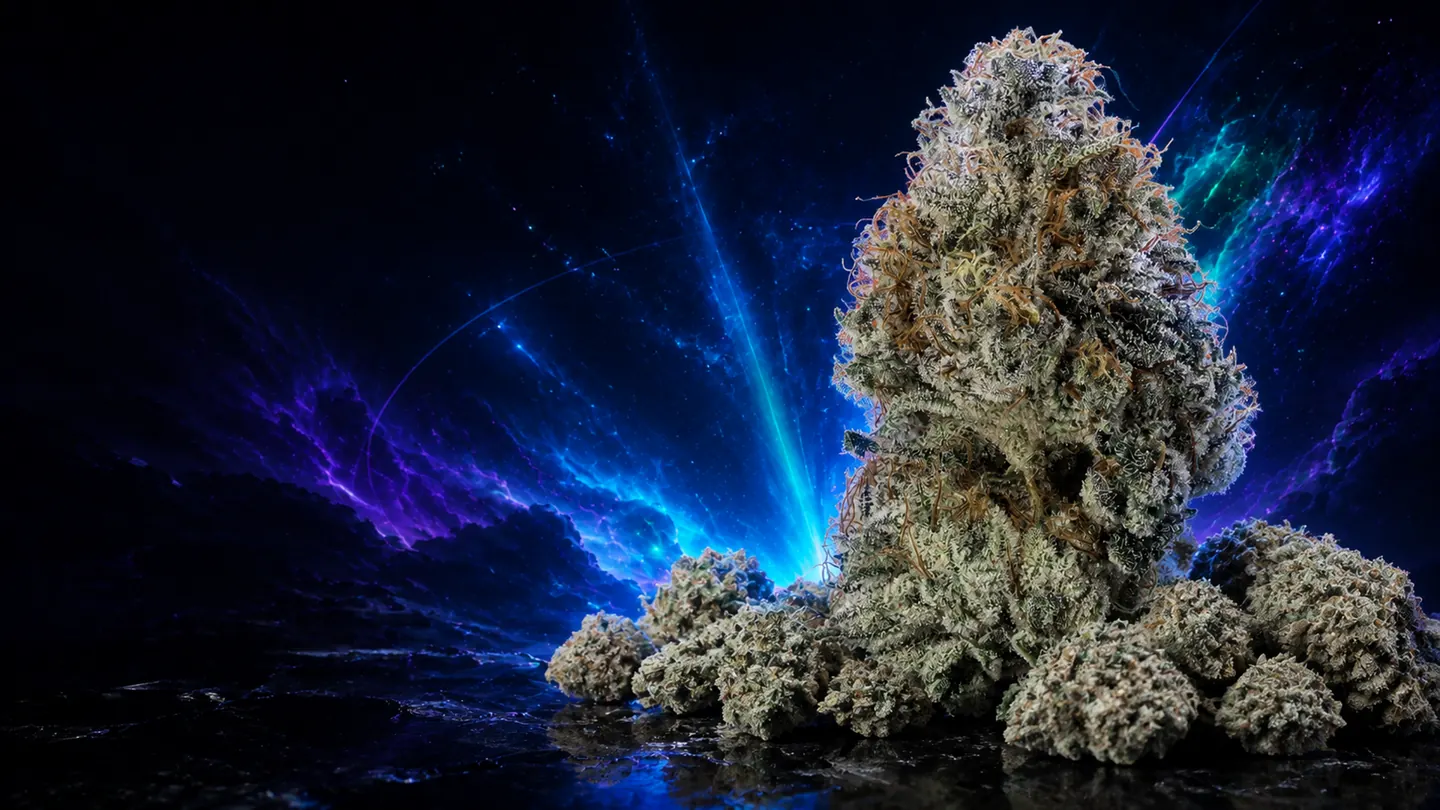
Dense hemp flower buds with visible trichome coverage, photographed against a blue and violet nebula
Representative of the flower we are cultivating. Batch photography, cultivar names and COAs replace this as each lot clears the lab.

Whole Flower

Hand-trimmed buds in eighths and quarters, jarred with a two-way humidity pack at 62%. Hand-trimmed because tumblers are faster and knock the trichome heads off in the process, which is the part you are paying for.

Coming soon

Pre-Rolls

Ground from whole flower rather than trim or shake, in singles and multi-packs, carrying the same batch COA as the flower they came from.

Coming soon

Smalls

Same plant, same cure, smaller buds, lower price. The sensible option if you were going to grind it anyway. Identical testing.

Coming soon

The Numbers, In One Place

Everything above, condensed. Published because "properly cured" means nothing on its own, and because a number is something you can hold us to.

Swipe the table sideways to see all three columns

Flower handling targets, from dry room through to delivery.
StageTargetWhy
Dry room60°F / 60% RH, 10–14 daysFast, hot drying traps chlorophyll in the bud and boils off the lightest terpenes first.
Finished moisture10–12%Under 10% goes brittle and dusty. Over 13% is genuine mould risk.
Water activity0.55–0.65 a<sub>w</sub>The measure labs use for microbial risk. Above 0.65 supports growth in the jar.
CureSealed, dark, 62% RH, 2–4 weeksChlorophyll and sugars break down. Burping vents the ammonia that produces.
StorageDark, 60–70°F, 62% RHHeat pushes THCA toward CBN. UV destroys terpenes faster than anything else.
PackagingOpaque, airtight, humidity packClear jars under shop lights are a display decision, not a storage one.
TransitSealed, discreet, odour-proofThe least controlled link in the chain, so the packaging has to carry it.

Get The First Drop

No date, for the reasons above. Leave your email and you will hear on the day the first batch is listed — nothing else, and you can unsubscribe from any message.

Read Further

We wrote the guides before we had anything to sell you, which is either admirable or poor business planning.

21+ only. Keep out of reach of children and pets. Do not drive or operate machinery after use. Consult a physician before use if you are pregnant, nursing, or taking medication. These products may cause you to fail a drug test.

FDA DISCLOSURE: The statements regarding these products have not been evaluated by the FDA. These products are not intended to diagnose, treat, cure or prevent any disease, consult your health physician before use. The Federal Food, Drug and Cosmetic Act requires placement of this notice.

SHIPPING RESTRICTIONS: This product is not available for shipment to the following states: Arkansas, Hawaii, Idaho, Kansas, Louisiana, Oklahoma, Oregon, Rhode Island, Utah, Vermont, Wyoming. Note: Products with Total THC content above 0.3% must not be shipped to these states.

All products are Federal Farm Bill Compliant and contain less than 0.3% Delta-9 THC by dry weight

Terms of Service · Privacy Policy · Shipping Policy · Refund Policy · Contact Us · Lab Results

© 2026 Galactic Jems. All rights reserved.